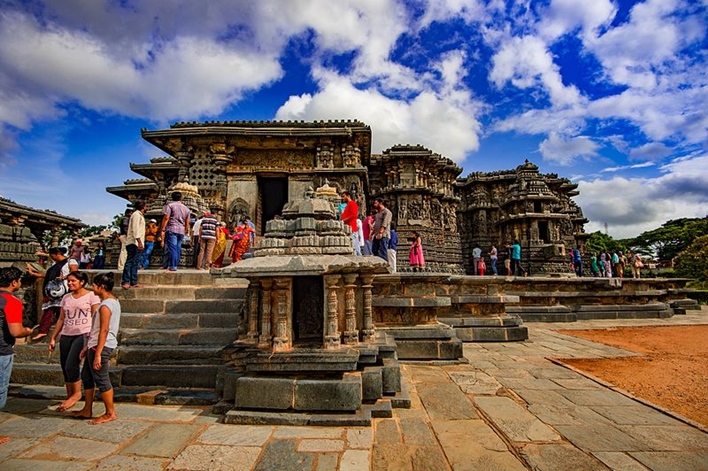
Nestled in the serene town of Halebidu in Karnataka, the Hoysaleshwara Temple is a timeless masterpiece of 12th-century Indian architecture. Dedicated to Lord Shiva, this majestic structure reflects the artistic brilliance of the Hoysala Empire, which once ruled the region. Situated on the banks of a tranquil man-made lake, this temple is not just a place of worship but also a historical treasure trove.
Commissioned by King Vishnuvardhana, the temple’s construction began in 1121 CE and was completed in 1160 CE. Despite its grandeur, the temple witnessed a tumultuous history. During the 14th century, it fell victim to invasions by the Delhi Sultanate. Today, it stands resilient, offering visitors a glimpse into the rich cultural heritage of medieval South India.
A Harmonious Blend of Traditions
The Hoysaleshwara Temple is an extraordinary example of architectural and spiritual integration. Although primarily a Shaivite monument, it also celebrates themes from Vaishnavism, Shaktism, and even Jainism, showcasing the inclusivity of Indian spirituality. The temple is a dvikuta vimana—a twin-shrine structure—with sanctums dedicated to Hoysaleshwara and Shantaleshwara, representing the masculine and feminine aspects of divinity. Flanked by two imposing Nandi shrines, the temple exudes an aura of devotion and artistry.
Intriguingly, the temple once boasted towering superstructures, which are now lost, giving it a flat appearance. Built entirely of soapstone, the temple’s intricacy is evident in its sculptures, friezes, and reliefs that narrate stories from Hindu epics such as the Ramayana, Mahabharata, and Bhagavata Purana.
An Artistic Wonderland
One of the temple’s most striking features is its intricately carved outer walls. These walls are adorned with bands of artwork depicting playful elephants, roaring lions, galloping horses, and scenes from Hindu mythology. The sheer detail is astounding—no two carvings are alike. The friezes also narrate the lives of gods, legendary battles, and the daily lives of people, offering a window into 12th-century South India.
Inside the temple, over 340 large reliefs bring to life Hindu theology and legends. From Krishna’s playful acts to Shiva in yogic meditation, every sculpture is a masterpiece of storytelling. The intricate depictions of musical instruments, dance postures, and mythical creatures add to the temple’s allure.
A Glimpse into History.
Halebidu, originally called Dorasamudra, was once the thriving capital of the Hoysala Empire. For nearly 300 years, it was a hub of art, culture, and religion. However, repeated invasions in the 14th century led to its downfall, and the town came to be known as Halebidu, meaning “old capital.” Despite the devastation, the Hoysaleshwara Temple remained a symbol of the Hoysalas’ architectural ingenuity.
Remarkably, the temple became one of the earliest Indian monuments to be surveyed and photographed during the British colonial period. Subsequent restoration efforts have preserved its legacy, making it an enduring icon of Indian heritage.
A UNESCO World Heritage Gem
In 2023, the Hoysaleshwara Temple, along with the Chennakeshava Temple in Belur and the Keshava Temple in Somanathapura, was declared a UNESCO World Heritage Site. This recognition as part of the Sacred Ensembles of the Hoysalas celebrates its unparalleled contribution to the world of art and architecture.
Located just 30 kilometers from Hassan and 210 kilometers from Bengaluru, Halebidu is easily accessible, making it a must-visit destination for history enthusiasts and spiritual seekers alike. The Hoysaleshwara Temple invites visitors to immerse themselves in the grandeur of an era gone by, where every stone tells a story of devotion, art, and resilience.
Experience the magic of the Hoysaleshwara Temple and step back in time to witness the glory of the Hoysalas. Whether you’re an art lover, history buff, or a curious traveler, this gem of Indian heritage promises to leave you spellbound.

0 Comments